Employee Monitoring in South Africa.

Everything you need to know about monitoring employee productivity in South Africa — legally, ethically, and effectively.

Why Monitor Employees?

The shift to remote and hybrid work has changed how South African businesses operate. With teams spread across home offices, co-working spaces, and multiple sites, managers no longer have line-of-sight into how work gets done. Employee monitoring software bridges that gap.

Beyond productivity, monitoring helps organisations protect sensitive data, meet compliance requirements, and identify bottlenecks before they become problems. South African businesses increasingly need visibility into how company devices and time are used — not to spy, but to manage effectively.

Whether you manage a call centre, an engineering team, or a distributed sales force, understanding how work happens is the first step to improving it.
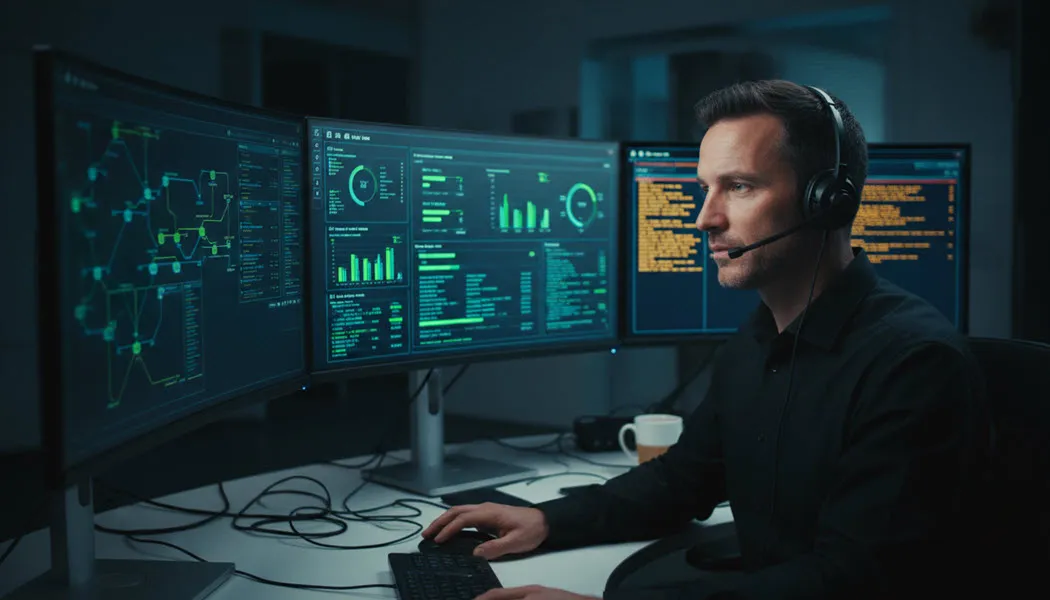
Employee monitoring dashboard

Legal Framework.

What South African law says about monitoring employees in the workplace.

POPIA — Protection of Personal Information Act

South Africa's POPIA (Act 4 of 2013) governs how organisations collect, process, and store personal information — including employee activity data. The Act does not prohibit employee monitoring, but it sets clear boundaries.

Employers can monitor employee activity on company devices and networks, provided they meet the following requirements:

  • Transparency: Employees must know they are being monitored. A clear monitoring policy should be communicated and acknowledged.
  • Consent: While implied consent through employment contracts is common, explicit consent is best practice. Include monitoring clauses in employment agreements.
  • Legitimate Purpose: Monitoring must serve a legitimate business purpose — productivity management, security, compliance, or asset protection.
  • Proportionality: Data collected must be proportional to the purpose. Don't collect more than you need.
  • Data Security: Monitoring data must be stored securely with appropriate access controls.

Best Practices for Compliance

To stay on the right side of the law and maintain employee trust, follow these guidelines:

  • Draft a written monitoring policy that explains what is monitored, why, and how data is used.
  • Include monitoring clauses in employment contracts or as an addendum signed by all staff.
  • Only monitor company-owned devices and networks — never personal devices without explicit, informed consent.
  • Give employees access to their own data through a staff portal for transparency.
  • Limit access to monitoring data to authorised managers and HR only.
  • Conduct regular data retention reviews — don't store monitoring data longer than necessary.

The Regulation of Interception of Communications Act (RICA) also applies if you intercept the content of communications. Monitoring metadata (who, when, how long) is less restricted than reading actual messages.

What to Look For in Monitoring Software.

The features that matter most for South African businesses.

📷

Screenshot Capture

Periodic screenshots of employee screens provide visual proof of activity. Essential for remote teams, compliance audits, and dispute resolution.

💻

Application & Website Tracking

See which applications and websites employees use throughout the day. Identify time spent on productive tools versus distractions.

Active & Idle Time Tracking

Distinguish between active work and idle time. Understand true productivity without relying on clock-in times alone.

📈

Real-Time Dashboards

Live visibility into team activity. See who is working, what they are using, and how productivity trends over time.

🤖

AI Categorisation

Automatic classification of applications and websites as productive, unproductive, or neutral. No manual tagging required.

📋

Compliance Reporting

Generate reports for POPIA compliance, HR reviews, and management audits. Demonstrate that monitoring is transparent and proportional.

StaffWatch by AOLC.

Employee monitoring software built specifically for South African businesses.

StaffWatch is AOLC's employee monitoring platform — designed from the ground up for the South African market. Unlike international tools that store your data overseas, StaffWatch keeps everything local with full POPIA compliance built in.

  • Locally hosted — your data stays in South Africa
  • AI-powered categorisation — applications and websites automatically classified
  • Staff portal — employees can view their own activity for full transparency
  • Lightweight agent — runs silently on Windows, no performance impact
  • Real-time dashboards — live team activity at a glance
  • Screenshot capture — configurable intervals, stored securely
  • Rand pricing — no USD exchange rate surprises
Learn More Start Free Trial

Per-Tenant

Each client gets isolated data and configuration. No shared databases, no cross-contamination.

POPIA Ready

Consent tracking, data retention policies, and access controls built into the platform.

AI Insights

Automatic categorisation runs every 15 minutes. No manual tagging needed.

Local Support

South African company, South African support team, South African business hours.

StaffWatch vs Other Solutions.

How StaffWatch compares to popular international monitoring tools.

Feature StaffWatch Teramind Hubstaff WorkTime
South African Company Yes No No No
Local Data Residency Yes No No No
Rand Pricing (ZAR) Yes No No No
AI Categorisation Yes Partial No No
Staff Self-Service Portal Yes No Limited No
Local Support Team Yes No No No

Start Your Free 14-Day Trial.

See how StaffWatch helps South African businesses monitor productivity — legally, transparently, and effectively. No credit card required.

Start Free Trial

Get in Touch.

Have questions about employee monitoring or StaffWatch? We are here to help.